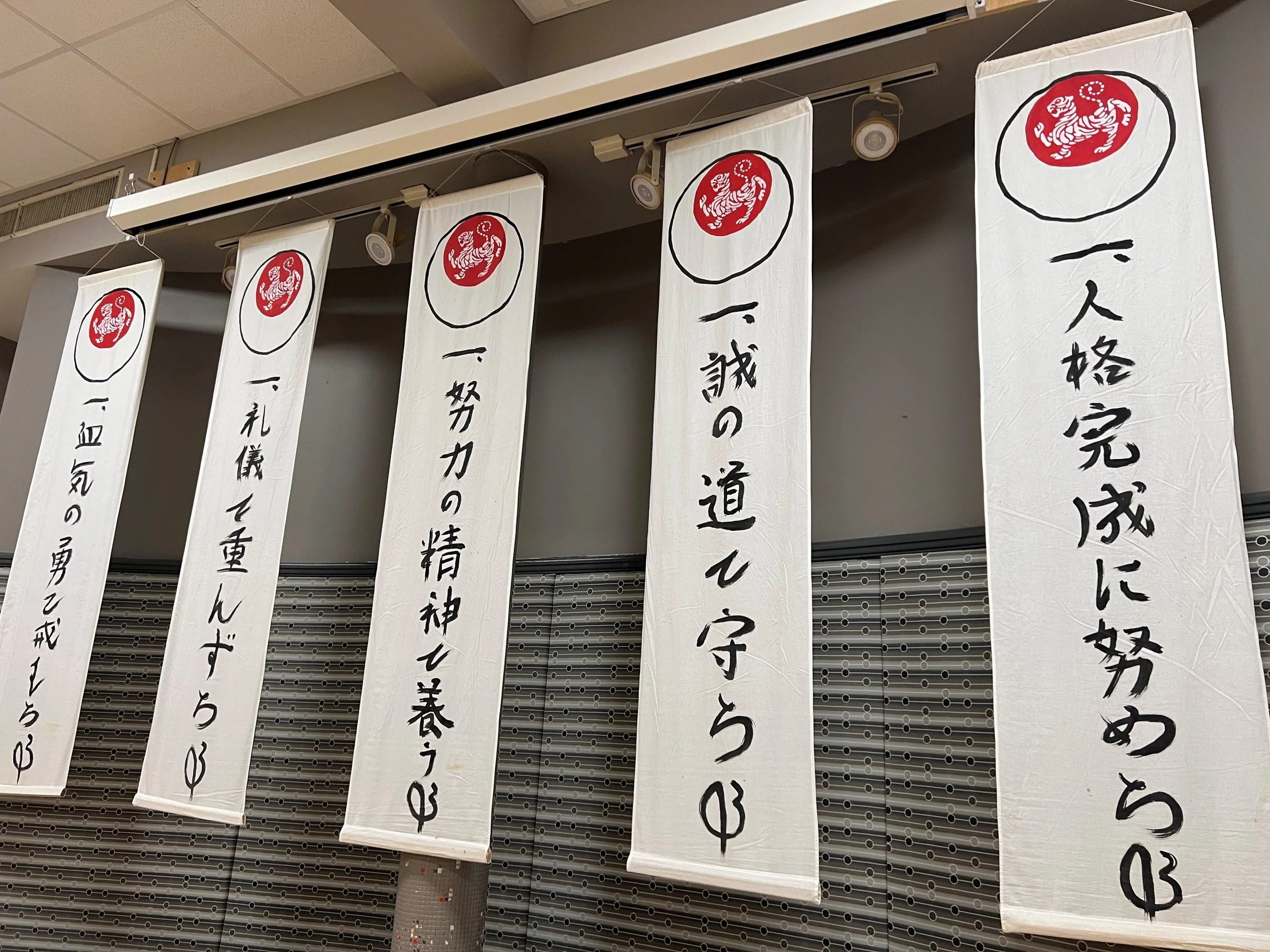
Dojo Kun
The Dojo Kun are the guiding principles of Shotokan Karate. They are short moral statements traditionally recited at the end of class in many dojos. The purpose of the Dojo Kun is to remind students that karate training is not only about physical skill, but also about character, discipline, and how one behaves in everyday life.
The five principles are often attributed to the teachings of Gichin Funakoshi and earlier Okinawan martial traditions.
-
Japanese: Hitotsu! Jinkaku Kansei ni Tsutomuru Koto
This principle means striving to become a better person. Karate training is meant to develop integrity, humility, patience, and self-discipline, not just physical ability.
-
Japanese: Hitotsu! Makoto no Michi o Mamoru Koto
This refers to honesty, sincerity, and loyalty. A karate student should act with integrity and stay true to their responsibilities, promises, and moral values.
-
Japanese: Hitotsu! Doryoku no Seishin o Yashinau Koto
This encourages perseverance and hard work. Progress in karate—and in life—comes through consistent effort, determination, and the willingness to keep improving.
-
Japanese: Hitotsu! Reigi o Omonsuru Koto
Respect is central to martial arts culture. Students show courtesy to instructors, training partners, and others, recognizing that learning and growth happen through cooperation and mutual respect.
-
Japanese: Hitotsu! Kekki no Yu o Imashimuru Koto
Karate teaches self-control. This principle reminds students to avoid aggression, control their emotions, and use their skills responsibly.